
It’s 2:30 on a Wednesday afternoon. You step out from the back office of your business to see three of your employees standing around with nothing to do, and you wonder how much the last half hour of business has cost you without seeing a single customer walk through the door. Whether you work in a bank, a hair salon, or an all you can eat oriental buffet, there are certain times of the day that are just plain slow for businesses, and so far as most of us know, there’s very little we can do about that. Well not for long.
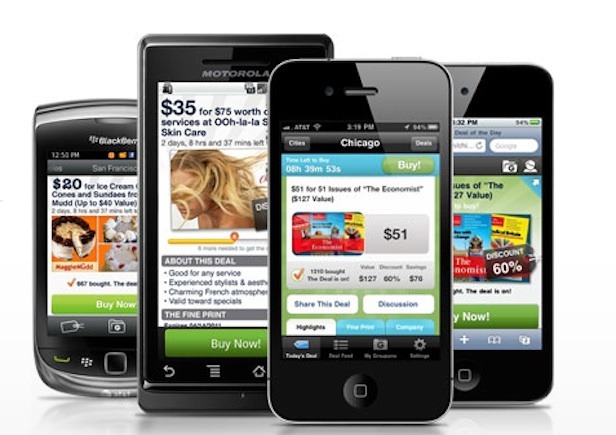
Right now, in a Chicago market trial, deal-of-the-day giant Groupon is testing its Groupon Now concept. Groupon Now allows businesses in the Chicago area to send special limited-time promotional offers to any nearby smartphone with the Groupon Now application. The goal: to help businesses drive traffic to their location with the ultimate in targeted promotional tools. In other words, if your business is typically slow around 2:30 on Wednesday afternoons, you will be able to offer promotions to the consumers closest to you for a one hour window between 2:00 and 3:00.

Since it’s launch two years ago, Groupon has grown to be the world’s largest daily deals service with more than 85 million subscribers. Groupon has become a promotional powerhouse but, at least until Groupon Now, has been employing a highly imitable business model (as evidenced by the Google announcing the launch of Google Offers following Groupon’s refusal of Google’s 6 Billion dollar buyout offer). With the help of Loopt, a company based in Mountain View, California that produces mobile location-based services, Groupon was able to launch Groupon Now. The rumors are that Groupon is going partner with more location based service providers, chief among them is Foursquare.
Foursquare has been a leader among location-based mobile services since it began interacting with businesses to offer promotions to users who “check in” with certain frequencies. A partnership between Groupon and Foursquare is what many are calling the next “hugely logical step” for both companies. We don’t know when the public will see a product come of this, but it will very likely be coming soon.
While this partnership brings together so much of what businesses want from their marketing efforts, is it what consumers want from their phones? Do you want your phone blowing up with “deals” as you drive from one end of town to the other? Let us know what you think in the comments section!
The problem I have with these mainstream daily deal websites is that the companies that use them offer things that the average person, like me, doesn’t want or need.
How many offers for yoga classes can I get?
I don’t have enough time in a week to go to five different restaurants and order $50 of food for $25.
And as much attention as I put to my personal hygiene, I don’t need a facial for twenty bucks.
I suppose the main problem with these mainstream deal sites is the fact that they are not targeted enough. I’m curious to see what happens with Facebook Deals; since FB has access to people’s interests I imagine the Deals will be more inline with consumer interest.
I’ve seen some sites that focus on one sub-category; like golf. The deal model is pretty simple, and fairly easy to replicate. So I can only expect to see more specialized deal sites like this to pop up; but I suppose time will tell.
But until FB Deals picks up, we are stuck with a 50% Off deal at a Finnish Bistro (I’m not making that up, that was my LivingSocial Deal today).
I agree with Chase, there are so many irrelevant offers that we get sent by email every day after signing up to one of these deal sites. I think if Groupon Now is to work, then people need to be able to upload their deal preferences to the app, so they don’t receive offers for services, unless they have specifically asked to be targeted for those kind of deals.