
When most people decide to buy a house, they usually have a checklist of practical requirements: three bedrooms, two baths, a good school district, and maybe a garage. It is a logical, transactional process.
But the market for log homes is different. Nobody buys a log cabin purely out of necessity. You don’t accidentally end up in a timber-frame lodge. People buy these homes because they are chasing a feeling. They are looking for an escape, a connection to nature, or a physical manifestation of a simpler life.
Because of this emotional driver, marketing a log home isn’t about selling square footage or discussing the efficiency of the HVAC system (though those things matter). It is about selling an aesthetic. It is about capturing a specific visual atmosphere that triggers a response in the buyer’s brain that says, “If I lived here, I would finally be relaxed.”
In this niche real estate sector, aesthetics aren’t just the icing on the cake; they are the entire bakery. Here is why the visual presentation is the single most important lever in log home marketing and how builders and sellers can leverage it.
1. The Psychology of Cozy
The primary product a log home dealer is selling is cozy. This is a powerful psychological trigger. In a world that feels increasingly sterile, digital, and fast-paced, the aesthetic of wood—with its knots, grain, and warm tones—acts as a visual antidote.
When marketing these properties, the aesthetics need to lean into this. A photo of an empty room with white drywall doesn’t sell. A photo of a roaring fire in a stone hearth, casting a warm glow on honey-colored pine logs, sells instantly.
This is why staging is critical. The furniture and decor need to tell a story. Leather armchairs, woven blankets, and rustic lighting fixtures aren’t just clutter; they are context clues. They tell the buyer how to use the space. If the aesthetic feels cold or unfinished, the fantasy breaks, and the buyer moves on.
2. Texture is the New Luxury
In standard construction, walls are flat and featureless. In log construction, the walls are the art. Successful marketing highlights the texture of the materials. High-definition photography that captures the rough-hewn surface of a hand-peeled log or the precise joinery of a dovetail corner communicates quality without saying a word.
This tactile appeal is unique to the industry. Marketing materials shouldn’t just show the whole house from a distance; they should zoom in. They should show the massive timber trusses in the vaulted ceiling. They should show the grain pattern on the staircase.
Humans are tactile creatures. Even through a screen, we can “feel” texture with our eyes. By emphasizing the rugged, solid nature of the materials, you are signaling durability and craftsmanship. You are proving that this isn’t just a house built of 2x4s and sheetrock; it is a structure built to last for generations.
3. The Curb Appeal is Actually Landscape Appeal
With a suburban colonial, curb appeal means mowing the lawn and maybe painting the front door. With a log home, the aesthetic extends to the horizon line.
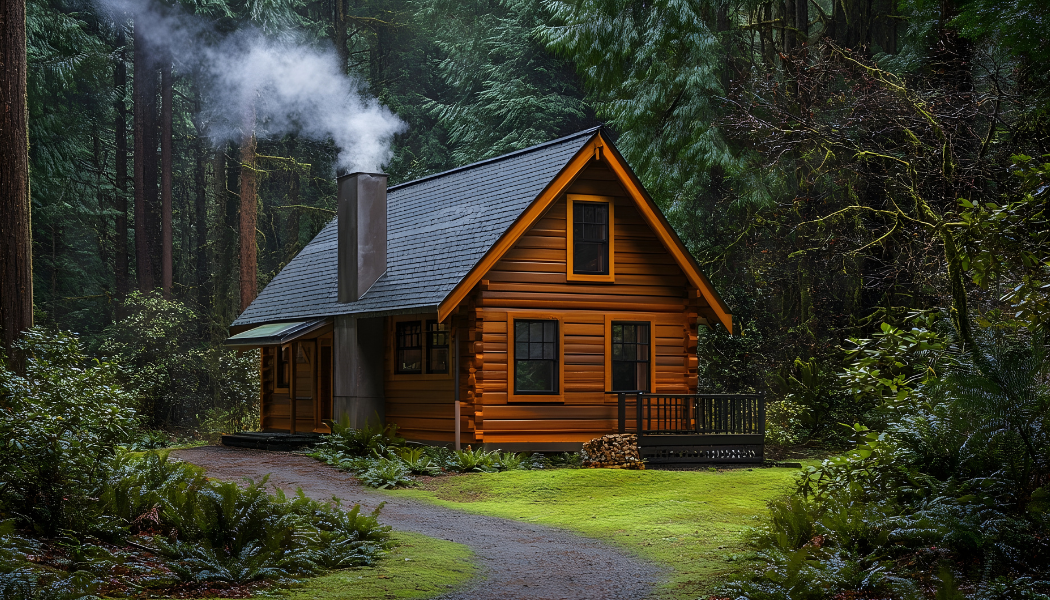
These homes are almost always tied to their environment. Whether it is perched on a mountainside, tucked into a forest, or sitting by a lake, the setting is half the value.
Marketing that ignores the landscape fails. The aesthetic of the home must look like it “belongs” to the land. This influences everything from the stain color chosen for the exterior to the landscaping around the foundation.
- The Mistake: Using harsh, industrial landscaping or paving the entire driveway with blacktop, which clashes with the rustic vibe.
- The Win: Using native stone, wildflowers, and winding gravel paths that make the home feel like it grew out of the earth.
When photographing the exterior, the Golden Hour (sunrise or sunset) is non-negotiable. You need that natural, warm light to interact with the wood. Mid-day sun can make log homes look washed out or flat. The goal is to make the home look like a Thomas Kinkade painting come to life.
4. Navigating the Rustic vs. Modern Divide
One of the biggest aesthetic challenges in marketing today is the split in buyer demographics.
- The Traditionalist: Wants the classic “Lincoln Log” look. Darker stains, chinking between the logs, and a very hunting lodge vibe.
- The Modernist: Wants a “Mountain Modern” look. Lighter, natural wood tones, massive glass windows, and black metal accents.
Marketing cannot be one-size-fits-all. You have to identify which aesthetic your specific build leans toward and market to that avatar.
If you are selling a modern timber frame with floor-to-ceiling glass, don’t stage it with plaid sofas and mounted deer heads. Stage it with sleek, mid-century modern furniture. Conversely, if you have a traditional hand-crafted cabin, lean into the heritage look. Being aesthetically confused—mixing ultra-modern fixtures with rustic rough-sawn walls—can alienate both groups. The design language needs to be coherent.
5. The Instagram Factor
We cannot ignore the role of social media. There is a massive online community obsessed with the aesthetic of cabin living.
For log home companies, this is free marketing—if the aesthetics are right. A beautifully framed shot of a morning coffee on a cedar deck overlooking the mist is highly shareable content. It travels further than a listing sheet ever could.
This “shareability” drives brand awareness. Even people who aren’t ready to buy today will follow a log home builder if the feed is visually stunning. Then, five years down the road, when they are ready to build their retirement dream home, that builder is the first one they call. They aren’t calling because they know the builder’s price per square foot; they are calling because they fell in love with the builder’s aesthetic years ago.
In the end, logic might close the deal, but emotion opens the wallet. And in the world of log homes, emotion is driven by what we see.
The aesthetic presentation—the warmth, the texture, the lighting, and the setting—is the bridge that connects a pile of lumber to a buyer’s dream. By treating the visual identity of the home with the same care as the structural engineering, marketers can tap into the deep, primal desire we all have for a warm, safe place in the woods.