
A rider walks away from a crash with a cracked fairing and a bruised hip, and still loses the case before the ink dries on the police report. The other driver says the bike came out of nowhere. The adjuster writes down “unknown speed, unknown lane position.” Three weeks later, the only version of events anyone is debating is the one the rider cannot prove.
That is what costs motorcyclists real money, and it is why an action camera clipped to a helmet now shows up in investigator files that used to run on skid marks and witness guesses. For a rider trying to understand what a claim is worth, that short clip is often the difference between a lowball offer and a serious one.
The question is no longer whether helmet-cam footage belongs in a crash investigation. It’s when the video wins the argument, and when the older tools still carry more weight.
Two Ways to Tell the Same Story
Traditional motorcycle crash reconstruction builds the story backward. Investigators measure skid length, examine crush damage, pull the event data recorder from the car if there is one, and interview whoever stayed on scene. The work is careful and slow, and it leans on inference. A good reconstructionist can estimate a closing speed within a reasonable band, and “reasonable band” is exactly what defense counsel attacks.
Helmet-cam footage flips the order. The clip shows what the rider saw, when he saw it, and how long he had to react. It also shows what the other driver did in the seconds the police report compresses into one sentence. The reconstruction gives you a model; the video gives you a record.
Where the Video Wins the Argument
Cases that drag on for months without video tend to collapse quickly with it. Left-turn crashes are the clearest example. An NTSB review of multi-vehicle motorcycle crashes found that in nearly two-thirds of them, the other driver was at fault, most often because the driver failed to perceive the motorcycle in time. A ten-second clip from the rider’s helmet usually ends that argument on its own.
Video also shuts down the credibility fight that follows almost every rider claim. Insurers routinely argue the motorcyclist was speeding, lane-splitting, or weaving. Footage with a visible speedometer, lane markings, and the exact approach to the intersection makes those theories expensive to keep pushing.
Reconstruction Still Does the Heavy Lifting
Video does not replace physics. A helmet camera uses a wide-angle lens that distorts distance, compresses depth, and makes a car look farther away than it was. Raw footage shown to a jury without correction can mislead as easily as it clarifies.
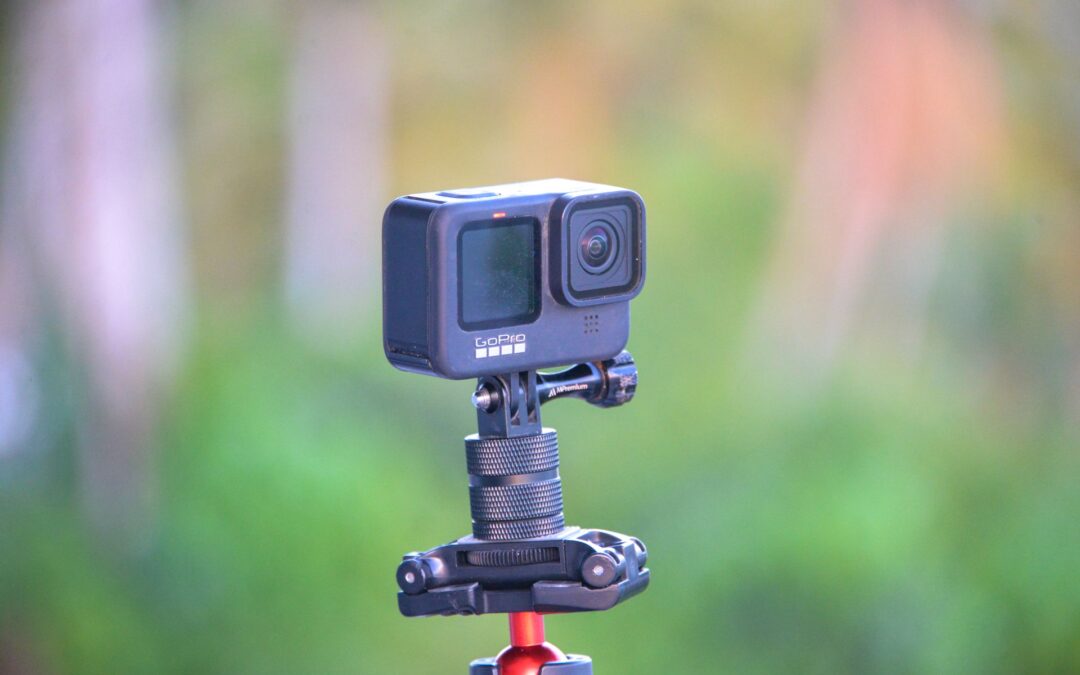
That is where the two approaches start working together instead of competing. A forensic case study from an engineering firm walked through exactly this: investigators took GoPro footage from a crash, corrected the lens distortion, laser-scanned the scene, and matched the video frames to a 3D model to pull real speeds and positions out of the clip. The video supplied the moment; the reconstruction supplied the math.
The Footage Can Also Hurt the Rider
Riders assume the camera is on their side, and the camera does not always agree. Three patterns show up repeatedly:
Speed on the speedometer. If the frame shows the bike at 55 in a 45 zone five seconds before impact, that number is now part of the record whether the rider wanted it there or not.
Risky lane behavior. Weaving, close following, or a late brake input reads differently on video than it felt in the moment.
Audio commentary. Mounted mics capture whatever the rider said in the seconds before and after the crash. Statements made under adrenaline rarely sound good read back in a deposition.
The rider still owns the footage, which means the rider also owns the decision about when, and whether, to turn it over without a subpoena.
Preserve the File Before the Fight Starts
The single most common way helmet-cam evidence disappears is the loop. Most action cameras overwrite old files once the memory card fills. A rider who leaves the camera in the saddlebag for a week may come back to a card holding commuting footage and nothing else.
Pull the card the day of the crash, copy the file twice, and leave the original untouched. Note the camera model, the mount position, and the time setting.
The clip is not a verdict. It is a witness, and witnesses need to be handled before they walk away.